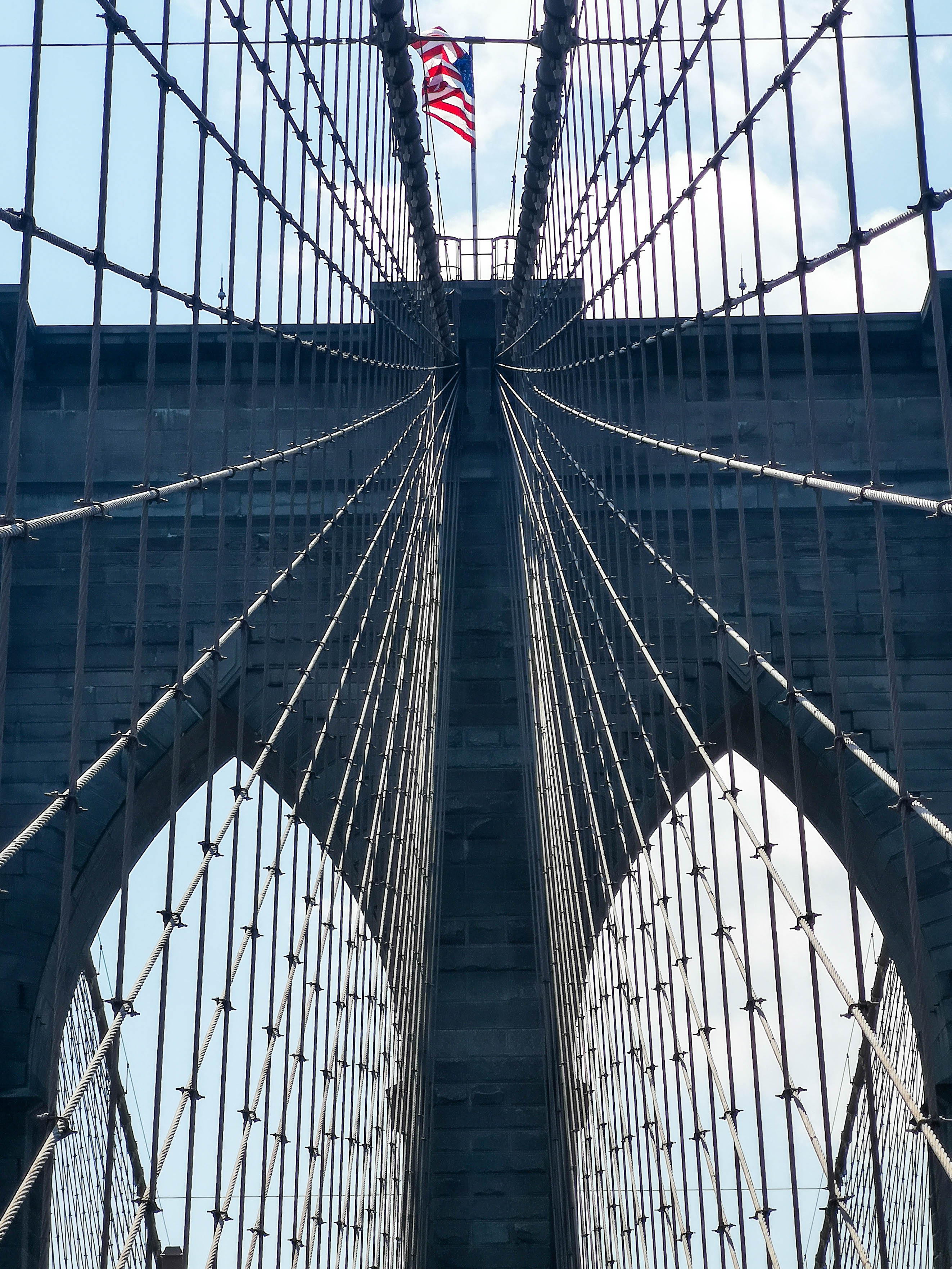
The Brooklyn Bridge, an iconic suspension bridge in New York City, connects the boroughs of Manhattan and Brooklyn across the East River. Completed in 1883, it was one of the first steel-wire suspension bridges in the world and, at the time, the longest, with a main span of 1,595 feet. Designed by John A. Roebling and completed by his son, Washington Roebling, after John’s death, the bridge was a groundbreaking feat of engineering and remains a beloved landmark.
Engineering and Construction
The bridge’s design introduced innovative techniques, including the use of steel cables and caissons, which were submerged watertight structures that allowed the bridge’s foundations to be sunk deep into the riverbed. Tragically, John Roebling sustained a fatal injury during the early stages of construction, and Washington Roebling later suffered from decompression sickness, known as “caisson disease,” which left him largely bedridden. Washington’s wife, Emily Warren Roebling, played a crucial role in overseeing the project, acting as a liaison and mastering the technical details to ensure the bridge’s completion.
Architectural Significance
The bridge is renowned for its distinctive Gothic-style arches and intricate cable patterns, giving it both structural integrity and aesthetic beauty. Its granite towers, each standing 276 feet high, were a marvel of architecture, symbolizing both strength and grace. The promenade, originally designed to be above the roadway, offers pedestrians and cyclists stunning views of Manhattan, the East River, and beyond, making the bridge not only a functional structure but a scenic public space as well.
Legacy and Cultural Impact
Since its completion, the Brooklyn Bridge has been an enduring symbol of New York City’s ingenuity and resilience. It was designated a National Historic Landmark in 1964, and its striking architecture has made it a popular subject in art, literature, film, and photography. Today, the bridge is a cherished landmark, serving as a major thoroughfare and tourist attraction while remaining an enduring emblem of connection between Manhattan and Brooklyn.