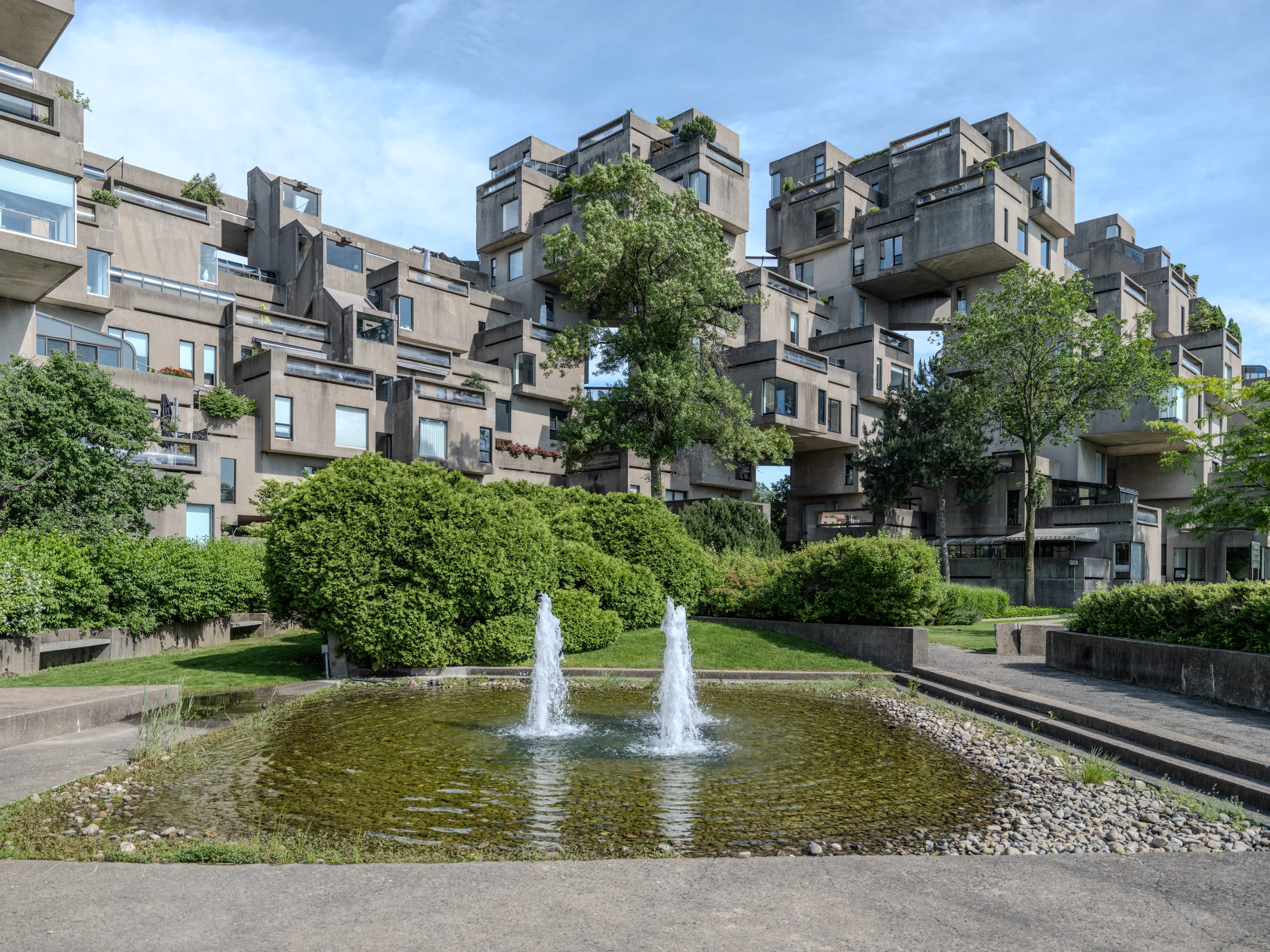
Habitat 67 — Montreal’s Iconic Modular Landmark
Background & Vision
Designed by Moshe Safdie as his master’s thesis at McGill and built for Expo 67, Habitat 67 reimagined urban living by stacking 365 prefabricated concrete “boxes” into 158 unique apartments, each with private terraces and multi-aspect views.
Architecture & Features
15 housing types (1–4 modules), with homes ranging from ~56 m² to ~167 m²
Every unit enjoys a private roof garden thanks to deliberate offsetting in the stack
The structure integrates three elevator cores, pedestrian “streets,” playgrounds, and communal amenities—all built into the load-bearing system
Legacy & Recognition
Habitat 67 was awarded the RAIC Prix du XXe Siècle (2007) and designated a Quebec National Heritage Building (2009)
A half-century later, it was commemorated on a Canadian stamp and still attracts global architectural admiration
Modern Relevance
A significant renovation for its 50th anniversary improved waterproofing, insulation, energy efficiency, and restored interiors. Since 2017, guided public tours have operated during summer months, including visits to Safdie’s restored apartment
Living There Today
Though initially intended as middle-class housing, high costs and upkeep made it less affordable; however, Safdie has said that its exclusivity reflects desirability
Residents note spectacular views and ample light, but also high condo fees (circa CA $1,200/month) and occasional water/plumbing issues typical of a 1960s concrete structure