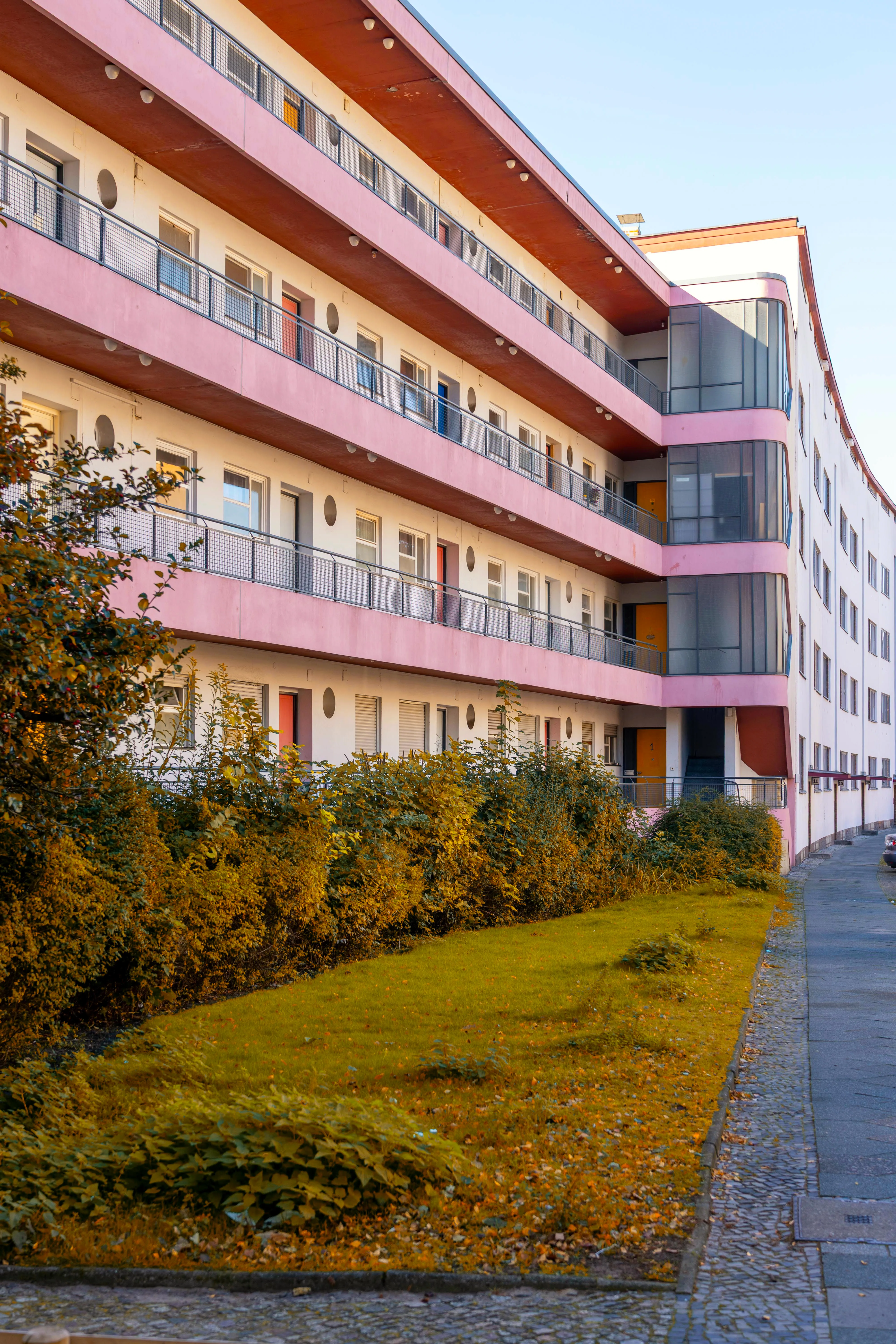
Siemensstadt is a neighborhood in Berlin’s Spandau district, developed in the early 20th century when Siemens built factories and housing for its workers, effectively creating a “company town.” Its most famous feature is the Siemensstadt Housing Estate, a landmark of 1920s modernist architecture designed by figures such as Walter Gropius and Hans Scharoun, now recognized as a UNESCO World Heritage Site. Today, the area combines historic housing with industrial and commercial zones, and is undergoing transformation through Siemensstadt, a major project aimed at turning it into a modern hub for research, innovation, and urban living.
The Siemensstadt Housing Estate (also called Ringsiedlung Siemensstadt, built 1929–1934) was a collaborative project by several leading modernist architects, all associated with the avant-garde architectural group Der Ring. The key architects were:
- Walter Gropius – founder of the Bauhaus, contributed housing blocks in his functionalist style.
- Hans Scharoun – later known for the Berlin Philharmonie, added more organic, free-flowing designs.
- Hugo Häring – emphasized individual, flexible layouts for residents.
- Otto Bartning – a pioneer of modern church and housing architecture.
- Fred Forbát – a Hungarian-German architect and urban planner, closely tied to Bauhaus ideas.
- Paul Rudolf Henning – less internationally known, but contributed to the ensemble.
Together, they created one of the most important examples of modernist social housing in Berlin, which is why the estate was included in the UNESCO World Heritage “Berlin Modernism Housing Estates.”