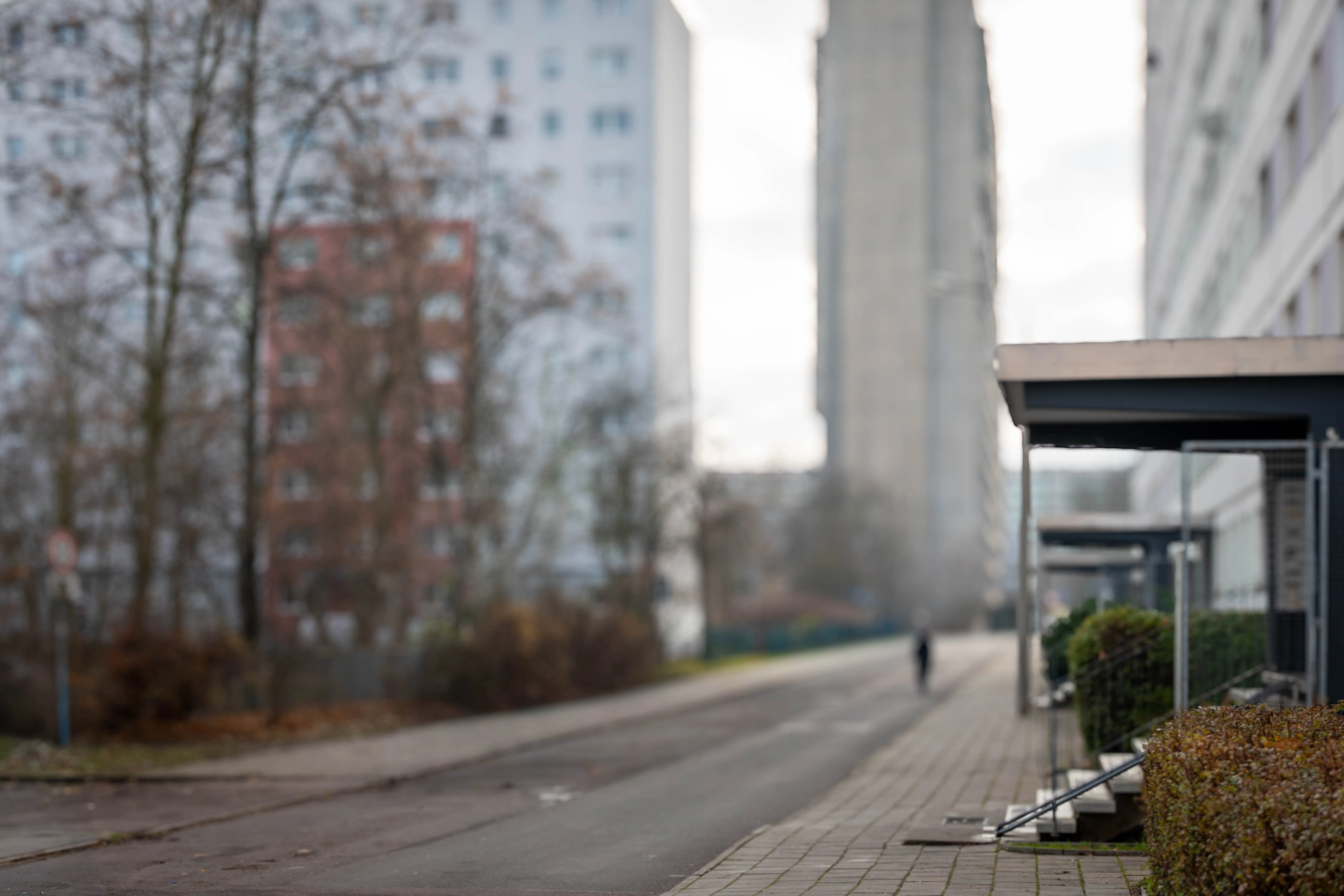
Halle-Neustadt (often called HaNeu) is a large socialist planned
housing district in Halle (Saale), Germany. It was originally built as
an entirely new city in the former East Germany (GDR) to house workers
of the nearby chemical industry.
Construction began in 1964, and in 1967 Halle-Neustadt officially
became an independent city. It was a showcase project of socialist
urban planning: built almost entirely from prefabricated concrete slab
buildings (“Plattenbau”).
HaNeu was built with an emphasis on the residents with large
residential blocks, green spaces, separation of pedestrian and car
traffic, schools, shops, daycare centers, and cultural facilities
integrated into each district.
The resulting city, built on socialist principles grew rapidly. By
the early 1980s over 90,000 people lived there.
After German Reunification (1990) Halle-Neustadt lost its status as an
independent city and was incorporated into Halle (Saale). The economic
changes and deindustrialization in the east following reunification
caused a population decline, halved to 45,000 in 2010. This resulted
in many buildings becoming vacant; with some demolished and smaller
numbers others were renovated.
Today HaNeu remains one of the most significant examples of socialist
post-war urban planning. Like similar East German housing areas, HaNeu
faces demographic and social changes, the challenge of attracting new
residents and redeveloping its aging infrastructure and buildings.


Leave a Reply